Mining companies around the world are increasingly expanding mineral extraction at existing sites rather than opening new mines, as global demand for critical minerals rises, driven largely by the clean energy transition, a new study has found. The research, published on January 22 in the Cell Press journal One Earth, shows that while the expansion …
Research:Expansion of existing mines raises environmental and social risks
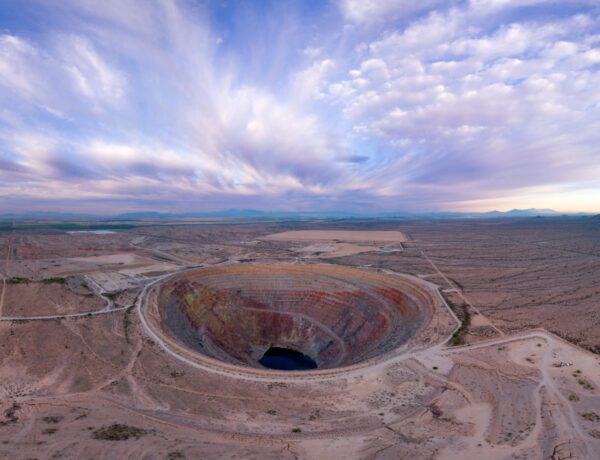
Mining companies around the world are increasingly expanding mineral extraction at existing sites rather than opening new mines, as global demand for critical minerals rises, driven largely by the clean energy transition, a new study has found.
The research, published on January 22 in the Cell Press journal One Earth, shows that while the expansion and intensification of mining at existing operations—known as brownfield mining—helps meet growing demand for minerals, it can significantly worsen environmental and social risks over time.
Despite these risks, such expansions often attract less public scrutiny and regulatory oversight than new mining projects.
“Current policy and debate are focused on approving new critical mineral mines,” said lead author Deanna Kemp of the University of Queensland in Brisbane, Australia. “That is important, but our study draws attention to a deeper shift, which is the ongoing expansion of existing mines and the long-term environmental and social liabilities this creates.”
Global demand for minerals such as copper, cobalt and lithium has increased steadily over recent decades, reflecting their importance in electric vehicles, power grids and battery technologies. Some estimates suggest demand for these minerals could rise by as much as sixfold by 2040.
To meet this demand, mining companies are increasingly extending the life of existing operations by exploring deeper deposits and expanding activities near current sites. While new mining projects can take up to 15 years to permit and develop, brownfield expansions often proceed more quickly and with limited public engagement. These expansions typically generate more waste, require additional land, and intensify environmental impacts in areas already affected by mining.
To better understand the scale of this trend, Kemp and her team analysed global mineral production and investment data, identifying 366 brownfield mining sites worldwide. Using satellite imagery and global datasets tracking environmental and social conditions, the researchers found that more than one-fifth of the sites are located within 50 kilometres of ecologically pristine or partially modified areas, including Arctic tundra and high-mountain regions.
The study also found that over half of the identified sites lie within 20 kilometres of biodiversity hotspots or protected areas, raising concerns about potential threats to sensitive ecosystems.
Social risks were also highlighted. Many brownfield operations are located in countries with high levels of structural inequality, where access to education and employment is uneven. More than a third of the sites are situated in countries affected by conflict or militarisation, while nearly 80 per cent are in locations facing multiple high-risk conditions such as water scarcity, weak governance and limited press freedom.
“What stood out to us is that many of these mines are operating in contexts with layers of social and environmental complexity,” Kemp said, noting that such conditions make effective regulatory oversight more challenging as risks accumulate.
The researchers cautioned that their findings may underestimate the true scale of brownfield expansion, as some newer underground mining technologies are difficult to detect using satellite imagery.
Kemp argued that if larger, deeper and longer-life mines are to play a central role in supporting the global energy transition, regulatory frameworks must evolve to better reflect this reality. She said mine expansions should be assessed for their cumulative and long-term impacts, rather than being treated as routine decisions compared to the approval of new mining projects.