President John Mahama has announced a bold new minerals policy that will end the export of raw mineral ores from Ghana by 2030, in what he describes as a decisive shift toward economic sovereignty and industrial transformation. Speaking at his high-level side event, “Accra Reset’s Addis Reckoning,” on the sidelines of the 39th African Union …
Ghana to process all mineral ores locally by 2030
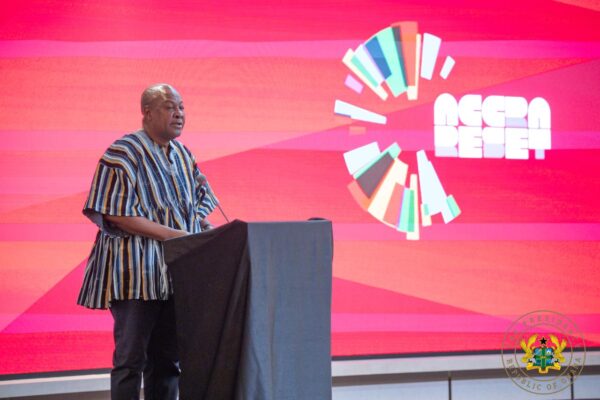
President John Mahama has announced a bold new minerals policy that will end the export of raw mineral ores from Ghana by 2030, in what he describes as a decisive shift toward economic sovereignty and industrial transformation.
Speaking at his high-level side event, “Accra Reset’s Addis Reckoning,” on the sidelines of the 39th African Union Assembly of Heads of State in Addis Ababa on Saturday (14 February), President Mahama declared that Ghana will no longer allow unprocessed mineral resources to leave its shores.
“I say by 2030, there won’t be any raw mineral ores leaving Ghana. You’re not going to ship raw manganese ore out of Ghana. You’re not going to ship raw bauxite ore out of Ghana. You’re not going to ship raw iron ore out of Ghana. You must process all that locally,” he stated.
The announcement signals a major structural shift in Ghana’s extractive sector, moving away from the long-standing model of exporting raw materials toward domestic value addition, beneficiation, and industrialisation.
President Mahama argued that Ghana’s mineral wealth must serve as a foundation for large-scale job creation, industrial growth, and technological advancement rather than simply feeding foreign processing industries.
Under the proposed framework, investment will be directed toward establishing and expanding local processing plants for manganese, bauxite, iron ore, and other strategic minerals. The policy aligns with Ghana’s broader industrialisation agenda and ongoing efforts to develop integrated value chains, including iron and steel production and aluminum processing.
The President positioned the reforms within the broader “Accra Reset” initiative — a continental call for African nations to assert greater control over their natural resources, strengthen domestic processing capacity, and restructure economic relations that have historically favored raw commodity exports.
He stressed that value addition is no longer optional but urgent, particularly given rising youth unemployment across the continent.
“That is the only way we can provide opportunities for our young people,” he said, linking industrialisation directly to job creation and economic stability.
President Mahama also emphasised that Africa must move from policy discussions to concrete implementation, warning that delays in industrial reform risk deepening economic vulnerabilities.
“We come with the decisions. We agree. We do the frameworks. What is missing is urgency and implementation,” he said.
He further proposed that countries ready to move forward with aggressive beneficiation policies should form a “coalition of the willing” to accelerate implementation, allowing others to join over time.
The 2030 deadline marks one of the most definitive timelines yet set by a Ghanaian leader regarding mineral beneficiation. If implemented, the policy would significantly transform Ghana’s mining sector, shifting it from a predominantly extraction-based model to an industrial processing hub within West Africa.
From Addis Ababa, President Mahama signaled that Ghana intends to lead by example — turning resource sovereignty from rhetoric into measurable policy action.
“From Addis, we must stop talking and start implementing,” he concluded.