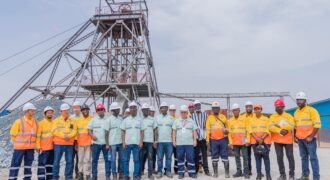

It is a heroic saga made in Ghana.
A homegrown company rises from contract mining to full ownership of a major gold mine. A local champion finally takes command of one of our most strategic assets. What’s there not to cheer?
But this story is why the katanomics framework was developed: noble political intentions don’t translate automatically to smart policy.
Ghanaians owning most of our natural resources is a no-brainer. The easy part is saying it. The real issue is planning and executing an intelligent strategy.
Which is why I worry about the signs at Damang.
First, the tender. This is a mine requiring geological assessment, a mine development plan, technical submissions, statutory clearances, and proof of at least $500 million in financial capacity. Yet the window for bids was basically just seven days. The tender was announced on March 24, 2026. The main bidding document only appeared online on March 25. The deadline was March 31. Seven holy days!
Ready-made for an insider?
Whatever it is, it falls far short of international standards. For such important projects, the AfDB sets 45 days just for expression of interest. Then follows the Request for Proposals stage. Before the cherries on the top.
In any credible mining jurisdiction, such a transaction requires 60 to 90 days of due diligence. Even the World Bank suggests 30 days for simple construction contracts.
Yet with Damang, everything seemed to have been done to prevent all non-insiders from assembling the necessary documents, securing alliances and funders, and undertaking serious pre-commitment studies.
That may be lawful in a narrow sense. But it is hard to call it competitive. Not by a long stretch. Must “resource nationalism” smell so flavourfully of favoritism?
Still, let us assume the end justifies some rough edges. Let us assume that Ghana has decided, politically, that E&P should become a national champion in mining. Even then, the state has a duty to be smart.
And this is where the Damang story gets more dangerous.
Gold Fields was accused by Ghana’s mining regulator of not wanting to invest at Damang because it was slow in funding the next phase. Why would anyone be slow about gold?
The truth is that Damang is hard. Commercial production began in 1997, when the easier near-surface ore could be mined. By the early 2010s, that easy ore was largely gone. The mine’s future shifted to deeper, more expensive, more technically demanding ore bodies.
Gold Fields says it invested $1.714 billion at Damang from 2017 to September 2024. Included in that figure was $327.5 million in capital waste stripping between 2017 and 2022, money spent removing enormous volumes of waste rock just to access deeper ore. Is that the profile of a company casually neglecting an easy asset? Or one wrestling with a difficult one?
The next phase of mining at Damang is even tougher. A massive tailings pit must be relocated to avoid catastrophic collapse. That means more studies, more approvals, more environmental review, more time, and more money.
Also, since active mining paused, the pits have been filling with water. Lots of it. Restarting requires dewatering, itself a major technical and regulatory exercise. There are environmental implications. There are water-use permits. There are sequencing questions. None of this is glamorous. We are talking lengthy procedures and huge costs.
And here is the most important point
All of this stuff typically get analysed and catered for in a definitive, bankable, feasibility study. Doesn’t look like Damang has one for the next phase. Big issue! Without one, no one can say for sure whether the gold there can actually be extracted profitably, safely, and legally under a realistic capital programme.
Such haziness can suffocate a national champion. Any one.
Because if E&P is handed Damang before the engineering, environmental, financing, and regulatory groundwork is truly complete, then it may be forced to operate in a legal and commercial minefield not of its own making.
It may spend months processing a few scrawny stockpiles while bigger approvals crawl along. It may become exposed to challenge on permits, feasibility, environmental compliance, or the programme of mineral operations. Raising a whole host of risks.
That would be unforgivable.
A serious national champions strategy – the kind that built Huawei or Samsung – does not throw a local firm into one of the region’s most complex mining situations and then call that empowerment. It grooms it. It disciplines it. It gives it runway, technical partnerships, rigorous financing structures, and room to climb.
If we allow our champions to cut corners at home, how would they fare in the cutthroat pits of international business. E&P itself learnt how tough the road is during that acrimonious exit from Liberia’s Yekepa.

We saw it during the pandemic when millions were handed to local pharma for discredited therapies. We saw it in the offshore oil sector where forced mergers ended in international arbitration. We should do better at Damang.
Let’s Clue Up
Supporters of E&P should be the first to demand a more robust and defensible process. They should want full disclosure of the tender results. They should want proper feasibility work. They should want every environmental and water approval in place. They should want Parliament to ask hard questions: royalties, state equity, stability, etc. They should want a lease that can survive scrutiny across administrations.
These are the issues I foresaw and got sued for pointing out. But facts are stubborn.
Building a national champion is head work. However much we wished it was heart work.
Read the full scope of issues here: https://brightsimons.com/2026/04/setting-up-national-champions-to-fail-the-case-of-ibrahim-mahama-and-ep/

By Bright Simons