The Apinto Traditional Council has submitted a proposal to the government seeking a new partnership framework that would give mining host communities greater participation in the ownership, governance and revenues generated from mineral resources. Dubbed the “Apinto Shared Prosperity Proposal,” the initiative is aimed at addressing what the Council describes as the longstanding imbalance between …
Apinto Council submits ‘Shared Prosperity’ plan ahead of Tarkwa Mine lease renewal
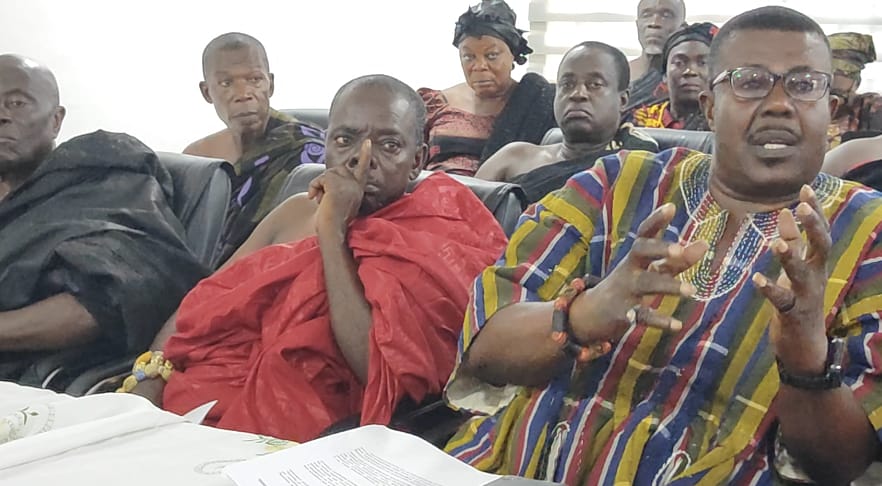
The Apinto Traditional Council has submitted a proposal to the government seeking a new partnership framework that would give mining host communities greater participation in the ownership, governance and revenues generated from mineral resources.
Dubbed the “Apinto Shared Prosperity Proposal,” the initiative is aimed at addressing what the Council describes as the longstanding imbalance between the benefits derived from mining and the environmental and socio-economic costs borne by host communities.
The Gyasehene of the Apinto Traditional Council, Dr. Nana Adarkwa Bediako III, disclosed the submission at a press conference in Tarkwa.
According to him, the proposal seeks to move beyond traditional corporate social responsibility initiatives and royalties by introducing mechanisms for co-ownership, co-governance and a fairer share of mining revenues for communities hosting mining operations.
The Council believes the current mining framework has historically limited the role of traditional authorities and host communities, with mineral ownership vested in the state.
Dr. Nana Adarkwa Bediako III said the proposed framework is particularly relevant as Ghana prepares for discussions on the renewal of the lease for the Tarkwa Mine, operated by Gold Fields Ghana Limited.
He argued that the lease renewal should provide an opportunity to rethink the relationship between mining companies, government and host communities.
The Council is also supporting calls for a Ghanaian-owned mining operation to take over the Tarkwa Mine when the lease renewal process begins.
The Gyasehene said the call is informed by concerns over the impact of mining on Apinto’s ancestral lands and the extent to which local communities benefit from the resources extracted from their areas.
He said a recent tour of the Gold Fields concession showed that approximately 4,000 hectares of Apinto lands had been degraded by mining activities, with consequences for farming, livelihoods and employment opportunities for young people.
He further cited poor road networks, inadequate social infrastructure and high youth unemployment as some of the challenges confronting communities in the mining area.
The Council also raised concerns about the operations of other mining companies, including AngloGold Ashanti, saying communities hosting mineral resources should receive a more meaningful share of the wealth generated from those resources.
The Apinto Traditional Council is therefore urging President John Dramani Mahama, Parliament, the Minerals Commission and other stakeholders in the mining sector to consider its proposal as part of broader efforts to reform Ghana’s mining industry.
The Council maintains that the renewal of the Tarkwa Mine lease should not be treated as a routine administrative exercise but should instead serve as an opportunity to establish a mining model in which host communities have a stronger voice and a greater stake in the country’s mineral wealth.