Africa’s vast natural resources can generate transformative prosperity for the continent, but only when unlocked through strategic partnerships, Zambian President Hakainde Hichilema has said. President Hichilema delivered the keynote address on the opening day of Investing in African Mining Indaba 2026, the continent’s largest mining investment event and a key platform for dialogue among governments, …
Africa must lead its own growth agenda through mining, says Hichilema
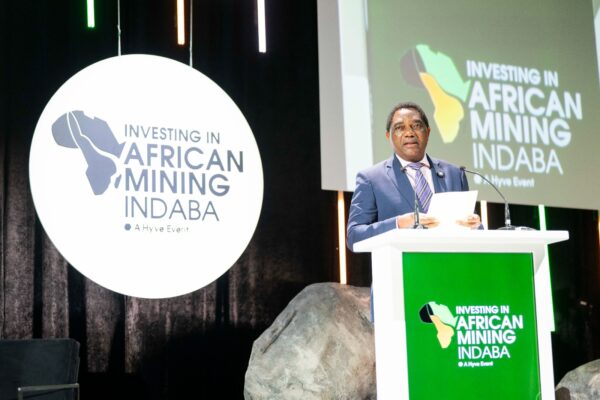
Africa’s vast natural resources can generate transformative prosperity for the continent, but only when unlocked through strategic partnerships, Zambian President Hakainde Hichilema has said.
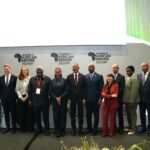
President Hichilema delivered the keynote address on the opening day of Investing in African Mining Indaba 2026, the continent’s largest mining investment event and a key platform for dialogue among governments, investors and industry leaders.
Drawing on Zambia’s experience, Hichilema said mining holds the key to revitalising Africa and securing the continent’s rightful place in the global economy.
He outlined how Zambia has placed the revitalisation of its mining sector at the centre of its economic agenda, prioritising regulatory certainty, transparency, stronger institutions and the deployment of modern mining technologies to support long-term growth.
With copper emerging as a critical mineral for artificial intelligence, defence and electrification, the copper-rich southern African nation is benefiting from unprecedented global demand for the metal.
Hichilema described Mining Indaba as a symbol of Africa’s aspiration for transformative partnerships.
“Zambia agrees that we are stronger together,” he said. “We all have capabilities, endowments, skills and experience. But no single one of us has enough to deliver the total package for our economies.”
He highlighted Zambia’s economic turnaround, with growth shifting from -2.8% to 6.4% within four years, noting that partnerships with mining companies have been central to the recovery.
According to Hichilema, the key to transforming Africa’s fortunes through mining lies in providing investors and partners with a clear and predictable path.
“We have to take leadership,” he said. “If we do that, others will support our strategies. It is easy to support people with a clear vision. But we must get organised so we can be worthy partners in the global community.”
Hichilema outlined Zambia’s progress toward its medium-term goal of producing three million tonnes of copper annually. Reforms introduced by his government have ended persistent litigation in the mining sector and enabled Zambia to successfully complete 38 months of reviews under the IMF’s Extended Credit Facility programme.
He urged African countries to reshape the narrative around IMF engagement.
“We must construct our own recovery programmes and ask the IMF to support us,” he said. “Those programmes should be about growth — not only fiscal consolidation and macroeconomic stability.”
Zambia’s reforms have also helped reduce inflation to single digits from a high of 22%. The mining sector is now generating employment and business opportunities for small and medium-sized enterprises.
Increased tax revenues from mining have supported the expansion of free education, with 2.3 million children now enrolled in schools. Zambia is also undertaking its first high-resolution geophysical survey in 50 years, helping to de-risk exploration and streamline mining approvals.
Since 2022, more than US$12 billion in new foreign investment has flowed into Zambia, largely into mining projects driven by the global copper boom. Copper production increased by 12% in 2024 and a further 8% in 2025.
On regional cooperation, Hichilema stressed the need for African countries to develop regional value chains, including logistics and beneficiation.
“Whether it is the TAZARA Railway or the Lobito Corridor, we need to focus not just on transport, but on what we are transporting,” he said. “We need a shared vision for beneficiation that moves beyond the port-to-pit approach.”
“Mining is about empowerment, equity and shared prosperity,” he concluded. “Let us use it to unlock Africa’s promise of better opportunities for the young people of our continent.”
Mining Indaba provides a platform for direct engagement between African governments and the global mining and investment community.
Earlier, South Africa’s Minister of Mineral and Petroleum Resources, Gwede Mantashe, said Africa must act collectively and speak with one voice to the mining sector.
“Trade unionists understand that workers cannot negotiate alone,” he said. “The same applies to Africa. We must negotiate mining and beneficiation deals with the rest of the world as a single economy.”
Investing in African Mining Indaba 2026 is the 32nd edition of the event and is taking place under the theme “Stronger Together: Progress Through Partnerships.”
The conference is Africa’s largest mining investment gathering, bringing together governments, mining companies, investors and financiers from across the global mining value chain.
Investing in African Mining Indaba 2026 is being held at CTICC 1 and 2 in Cape Town from 9–12 February.