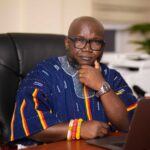
Renowned economist and Bank of Ghana Chair in Finance and Economics at the University of Ghana, Professor Yegandi Imhotep Paul Alagidede, has stated that Ghana has the domestic capacity to stabilise the cedi and break its long-standing cycle of International Monetary Fund (IMF) bailouts by anchoring the country’s monetary system to its abundant gold resources. …
Renowned economist and Bank of Ghana Chair in Finance and Economics at the University of Ghana, Professor Yegandi Imhotep Paul Alagidede, has stated that Ghana has the domestic capacity to stabilise the cedi and break its long-standing cycle of International Monetary Fund (IMF) bailouts by anchoring the country’s monetary system to its abundant gold resources.
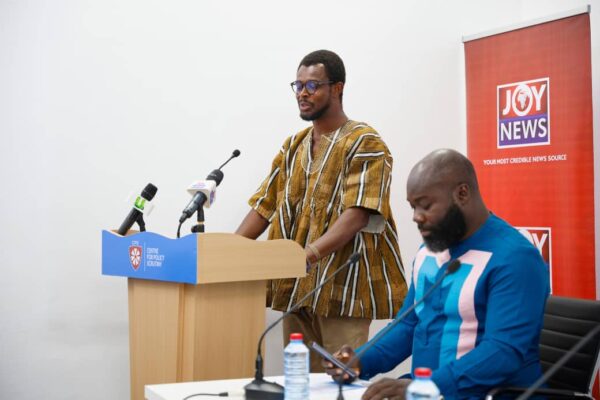
Delivering a seminal lecture in Accra on Monday, January 19, 2026, Professor Alagidede argued that Ghana’s liquidity challenges persist not because the nation lacks wealth, but because the current economic architecture fails to recognise and mobilise its natural assets—particularly gold—as balance-sheet capital.
Speaking at a public lecture jointly organised by the Centre for Policy Scrutiny (CPS) and JOYNEWS on the theme “Rich in Gold, Poor in Liquidity: Omnidox and the Reconstruction of Ghana’s Monetary Architecture,” he emphasised that Ghana’s structural vulnerabilities stem from outdated accounting frameworks and borrowed economic doctrines that overlook the country’s true asset base.
“Ghana is not a poor nation. Ghana is a wealthy nation in a temporary state of amnesia. Our challenge is not scarcity, but a failure to treat our gold as the foundation of our liquidity. If we activate even a conservative portion of our in-situ gold reserves, we can anchor the cedi, expand fiscal space, and end the recurring IMF cycles,” he said.
According to Professor Alagidede, gold should no longer be treated strictly as a commodity extracted and exported to shore up foreign currency reserves abroad, but rather as an endogenous monetary asset capable of supporting sovereign liquidity creation within clear governance rules. He noted that Ghana has visited the IMF 18 times in 60 years, ten of those visits occurring under democratic governance, despite being situated on one of the richest gold belts in the world.
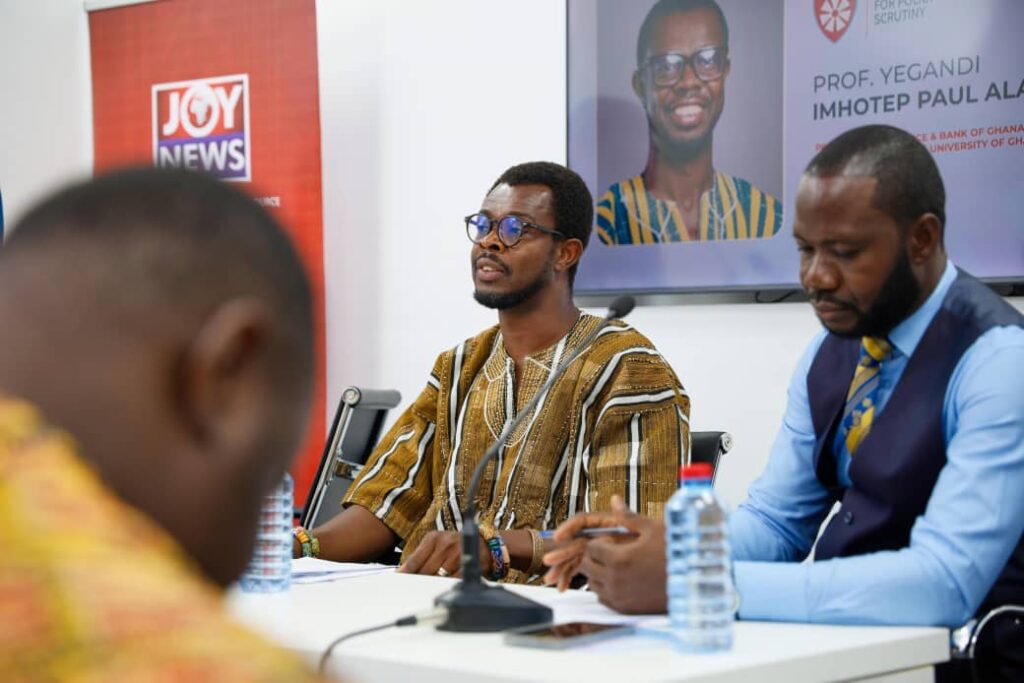
“Why do we keep going back to the IMF every three to five years?” he asked. “It is because orthodox accounting systems only count the gold we export, not the gold we own. Our balance sheet remains invisible in the eyes of credit rating agencies and orthodox economists, yet beneath our feet lies over a trillion dollars’ worth of value.”
He explained that Ghana has an estimated 1,000 metric tonnes of proven gold reserves, valued at approximately USD 146 billion at current global prices, with the potential to unlock between USD 634 billion and USD 952 billion in fiscal space if structured under the Omnidox liquidity framework. This, he argued, presents a transformative opportunity to redesign Ghana’s monetary and development strategy around domestic assets.
The lecture also highlighted progress made under the Domestic Gold Purchase Programme introduced during the tenure of former Vice President Dr. Mahamudu Bawumia. Professor Alagidede described the initiative as “a critical first step towards a resource-anchored monetary future,” citing the rise in Ghana’s gold reserves from 8 tonnes in 2021 to 38 tonnes in 2025.
Earlier, Executive Director of CPS, Dr. Adu Owusu Sarkodie, echoed similar sentiments, commending the originators of the programme for what he described as a “visionary policy shift” in Ghana’s reserve management strategy.
“We must applaud the Domestic Gold Purchase Programme and its architects,” Dr. Sarkodie said. “It has demonstrated that when we keep our gold in-country and treat it as a strategic national asset, our reserve position improves dramatically. The data speaks for itself.”
He added that Ghana, as Africa’s top gold producer and the sixth largest globally, must rethink its economic architecture to ensure that its natural wealth translates into monetary stability.
Throughout his presentation, Professor Alagidede challenged policymakers to adopt asset-based national accounting systems that value both visible and invisible wealth as a means of improving the welfare of Ghanaians. He urged the Ministry of Finance and the Bank of Ghana to shift from “flow economics” to “balance-sheet economics” by designing modern frameworks such as Resource-Based Monetary Sovereignty and endogenous resource-backed currencies.
“Our ancestors built economies based on the total value of their society—cattle, land, people, knowledge and relationships. Today, we count only what we can dig, extract and export,” he said. “If we truly incorporate our assets, Ghana is already a USD 100 billion economy today, not five years from now.”
Participants described the lecture as one of the most consequential economic conversations of the year, noting its relevance as Ghana grapples with currency volatility, tightening global financial conditions and post-IMF reforms.
Professor Alagidede concluded that gold can anchor the cedi and end Ghana’s IMF cycles, but this would require not only policy reform, but a fundamental shift in mindset, stressing that the liquidity Ghana seeks abroad already exists at home.
CPS indicated that proceedings from the lecture will feed into national policy dialogues and future fiscal and monetary reform proposals aimed at strengthening Ghana’s economic sovereignty.