The Africa Director of the Natural Resource Governance Institute (NRGI), Nafi Quarshie, has said that weak governance systems remain the biggest constraint to scaling up the global supply of critical minerals, despite growing demand driven by the energy transition. Speaking at the Future Minerals Forum in Riyadh, Quarshie noted that while governments around the world …
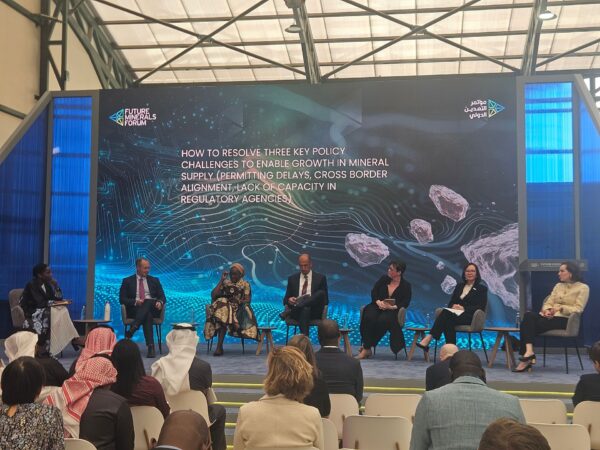
The Africa Director of the Natural Resource Governance Institute (NRGI), Nafi Quarshie, has said that weak governance systems remain the biggest constraint to scaling up the global supply of critical minerals, despite growing demand driven by the energy transition.
Speaking at the Future Minerals Forum in Riyadh, Quarshie noted that while governments around the world are announcing ambitious plans to develop transition and critical minerals, many are attempting to build 21st-century supply chains using outdated governance frameworks.
She explained that several governance-related patterns are slowing investment and limiting supply. One of these is rising mineral nationalism, as countries seek greater control over mineral resources.
However, she cautioned that without clear and stable regulatory frameworks, such approaches can increase uncertainty and deter long-term investment.

Quarshie also pointed to growing calls for local value addition and mineral processing, noting that many countries lack the foundational systems required to support these ambitions.
She said gaps in power supply, skills development, regulatory capacity and permitting processes often undermine efforts to move up the value chain.
Another challenge highlighted was the expanding role of state-owned enterprises in the mining sector without corresponding improvements in governance and oversight. According to Quarshie, weak accountability in such arrangements can result in hidden costs, unfavourable deals and increased fiscal risks for governments.

She further observed that while critical minerals frequently cross national borders, policy coordination does not, leading countries to compete with one another rather than collaborate on building stronger regional value chains.
To address these challenges, Quarshie said countries must adopt more integrated and forward-looking approaches to mineral governance. She called for stronger links between mining policy and power, industrial and trade strategies, investment in transparent and capable regulators, and greater coordination to develop regional processing hubs.
She also stressed the importance of early and meaningful community engagement, urging governments to involve affected communities from the outset rather than as an afterthought in critical minerals development.