Financial institutions (FIs) worldwide are at significant risk of exposure to the illegal wildlife trade (IWT), a crime that threatens biodiversity, destabilizes ecosystems, and fuels other criminal activities, according to a new report by the World Wide Fund for Nature (WWF) and financial crime risk platform Themis. The report highlights that IWT affects thousands of …
Survey: 81% of financial institutions operate in high-risk areas for wildlife crime
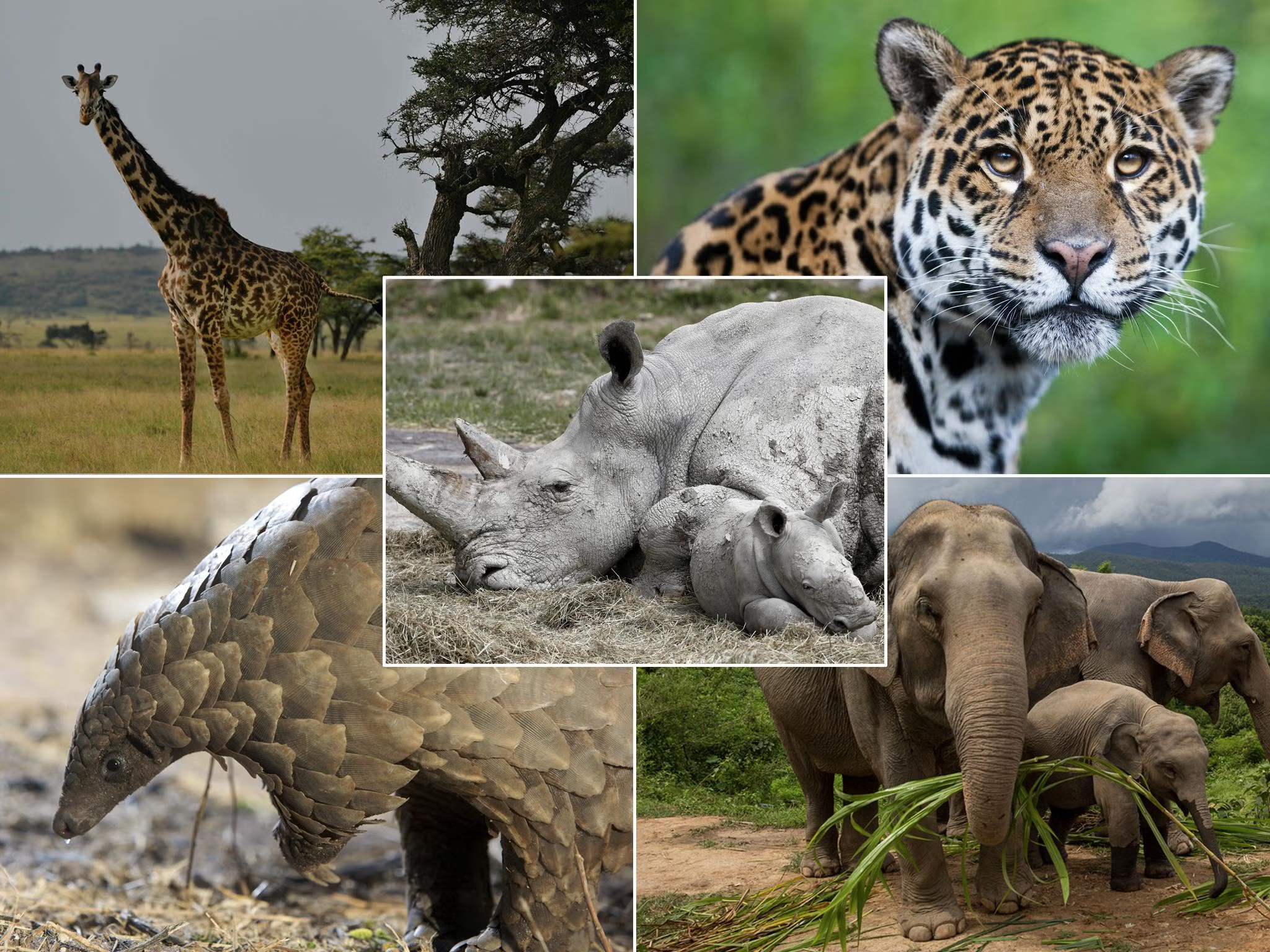
Financial institutions (FIs) worldwide are at significant risk of exposure to the illegal wildlife trade (IWT), a crime that threatens biodiversity, destabilizes ecosystems, and fuels other criminal activities, according to a new report by the World Wide Fund for Nature (WWF) and financial crime risk platform Themis.
The report highlights that IWT affects thousands of species across more than 160 countries, with wildlife populations declining by an average of 73% between 1970 and 2022.
Conservatively estimated, the annual value of IWT surpasses the GDPs of nearly one-third of countries worldwide, making it a lucrative crime recognized by INTERPOL and the United Nations Office on Drugs and Crime.
FIs can be exposed to IWT both directly and indirectly through trade finance, lending, commodity transactions, and third-party relationships. Risks span physical, regulatory, legal, and reputational domains, as well as environmental, social, and governance (ESG) impacts. IWT is often linked to a broader network of crimes, including money laundering, tax evasion, bribery, fraud, human trafficking, and sanctions evasion.
Data from an extensive survey of 829 financial sector professionals across 22 countries revealed that 81% of respondents operate in at least one high-risk area for IWT. However, the greatest exposure stems not from sourcing wildlife itself, but from the transit of goods—particularly maritime trade, where 90% of global shipments are seaborne and less than 2% of containers are inspected.
Despite widespread awareness of environmental crime, the report found a gap between knowledge and action. About 40% of respondents in high-risk sectors said their organizations do not screen for IWT risks, while nearly half of firms with high awareness of environmental crime reported having no formal IWT policy in place. Knowledge was also largely limited to high-profile areas such as the ivory trade, leaving many other species and products unmonitored.
The report stresses that closing this gap will require stronger internal policies, enhanced staff training, and public-private collaboration, including guidance from financial intelligence units and regulators. WWF and Themis have made practical tools available through the Environmental Crimes Financial Toolkit (ECFT), an open-access platform designed to help FIs identify and mitigate exposure to IWT and other environmental crimes.
By addressing these risks, financial institutions can reduce the flow of illicit funds linked to wildlife crime while contributing to global efforts to protect biodiversity and promote sustainable economic growth.
2021 ECOFEL – Financial Investigations Into Wildlife Crime by Fred Dzakpata