Mining governance expert Dr Kenneth Bansah has called for a phased approach to increasing local ownership of Ghana's major mining assets, arguing that concerns about financing and sustainability should not be used as blanket reasons to oppose the government's localization agenda. His comments come amid reports that the government is considering transferring the mining lease …
Kenneth Bansah calls for phased local takeover of strategic mining assets
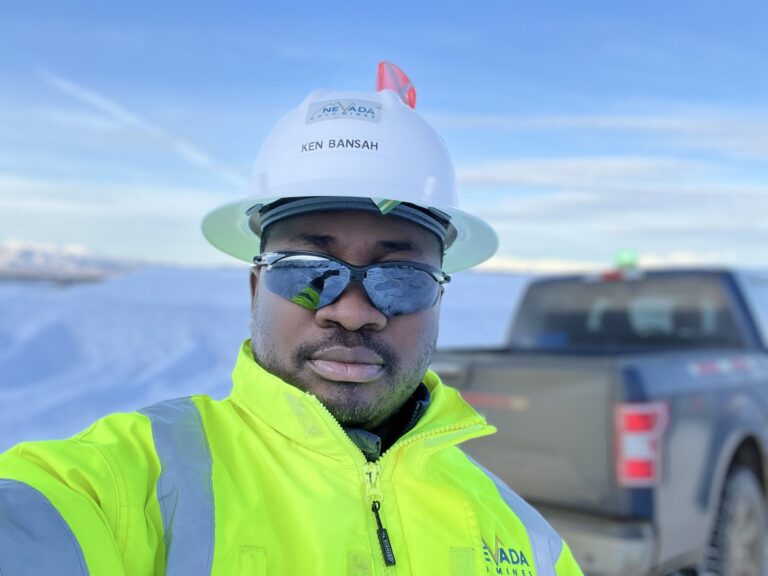
Mining governance expert Dr Kenneth Bansah has called for a phased approach to increasing local ownership of Ghana’s major mining assets, arguing that concerns about financing and sustainability should not be used as blanket reasons to oppose the government’s localization agenda.
His comments come amid reports that the government is considering transferring the mining lease of Gold Fields’ Tarkwa Mine to a local company when the current lease expires.
Below is the full write up
reported yesterday that undisclosed sources indicated that the government is considering transferring the mining lease of Gold Fields’ Tarkwa Mine to a local firm upon the expiration of the current lease. JoyNews subsequently republished the Bloomberg report.
To be clear, this is not really news. Almost everyone who has been following mining discussions in Ghana is aware of the government’s growing interest in increasing local ownership in the mining sector.
Anyway, some of you have tagged me in posts, while others have reached out privately to ask for my thoughts on the government’s reported position. My immediate response is captured in a local parlance, loosely translated as: if a vulture from your hometown eats your poop, there will still be some left over.
There is an argument that mining is capital-intensive and requires huge investments, extensive exploration, and long-term planning to bring a project into production. That is correct. However, the same can be said of many successful businesses. Every business requires strategic investment, long-term research and evaluation, and continuous capital injection to grow and remain competitive.
If local firms are to operate large-scale mines in Ghana, there must be clear arrangements that demonstrate financial stability and a commitment to long-term investment. Finding a mineral deposit to mine can be just as difficult as mining the mineral itself, and both require significant capital. Any serious mining operator thinking about the long-term success of its operations should reinvest part of its earnings into exploration, resource development, and feasibility studies. They do not always have to rely solely on borrowing from the market.
In addition, the government could consider public-private partnership models where local investors are allowed to buy and own shares in mining operations. Foreign investors could also participate, subject to limits that protect the intended local ownership objectives.
That said, the transition of some of Ghana’s largest mining assets to local ownership is complex. I do not necessarily think a complete transfer of such strategic assets should happen overnight.
A more practical approach may be a phased transition. For example, there could be a period of co-ownership or a joint venture arrangement for three – five years, during which ownership and operational responsibilities are gradually transferred to the local partner. Such an arrangement could help preserve institutional knowledge, ensure operational continuity, and reduce risks associated with the transition.
While I believe a lot of issues must be addressed and accounted for before major mining assets are transitioned to local firms, some of the arguments commonly raised against local ownership are not particularly strong. They may sound compelling, but they are not always supported by a strong foundation. Concerns about capital and long-term sustainability, for example, deserve scrutiny but are not necessarily insurmountable barriers.
The more fundamental question is whether local firms have the technical, managerial, and governance capacity to operate the mines successfully. As for financing, there are several models that can be considered to support continued investment and growth. If for nothing at all, GoldBod could potentially play a role, subject to their mandate and policy direction. There are multiple financing structures that can be explored to ensure the long-term sustainability of mining operations.
Lastly, I expect compelling arguments from industry leaders and the Ghana Chamber of Mines on the government’s localization agenda. The Chamber, in particular, has not been very convincing so far in this debate. I look forward to hearing stronger arguments and alternative perspectives as the conversation evolves.
Kenneth Bansah, PhD, PE