South Africa’s mining sector remains one of the most resource-endowed in the world, yet its performance tells a very different story. Despite benefitting from global commodity cycles and strong mineral reserves, the sector has failed to translate opportunity into sustained growth. In real terms, mining output is smaller today than it was in 1994, a …
Why exploration is the missing link
South Africa’s mining sector remains one of the most resource-endowed in the world, yet its performance tells a very different story. Despite benefitting from global commodity cycles and strong mineral reserves, the sector has failed to translate opportunity into sustained growth. In real terms, mining output is smaller today than it was in 1994, a stark indicator of underperformance in a country historically built on mining.
Insights from the recent Minerals Council South Africa, Junior and Emerging Miners Desk engagement point to a deeper structural challenge. South Africa’s mining sector is constrained not by geology but by a persistent decline in exploration activity, compounded by funding gaps, regulatory uncertainty and weakening investor confidence.
Globally, junior mining is associated with specialist exploration companies that are funded by venture capital and explore for new deposits. Once the minerals have been discovered, they sell for development rights to producers.
South African junior mining companies are typically small to medium producers in most commodities; those that are exploring are usually in brownfield projects and, due to the dearth of venture capital in South Africa, often rely on revenue generated from production to fund exploration.
Others seek funding from international markets, particularly from Australia and Canada. This is often supported by funding from internal markets as well as state institutions such as the IDC.
In a typical mining jurisdiction, rising commodity prices stimulate production growth. However, South Africa’s mining sector has shown a troubling disconnect from this pattern. While global mineral prices have experienced periods of significant growth, domestic mining output has not responded accordingly.
This phenomenon has been described as a cycle of short summers and long winters. “We see short summers and very long winters in South African mining. Even when prices improve, the sector does not respond as strongly as it should,” said Minerals Council’s acting chief economist, Bongani Motsa. Over time, this has translated into a sector that is not only volatile but structurally constrained. The implication is clear. The issue is not cyclical, but systemic.
Exploration
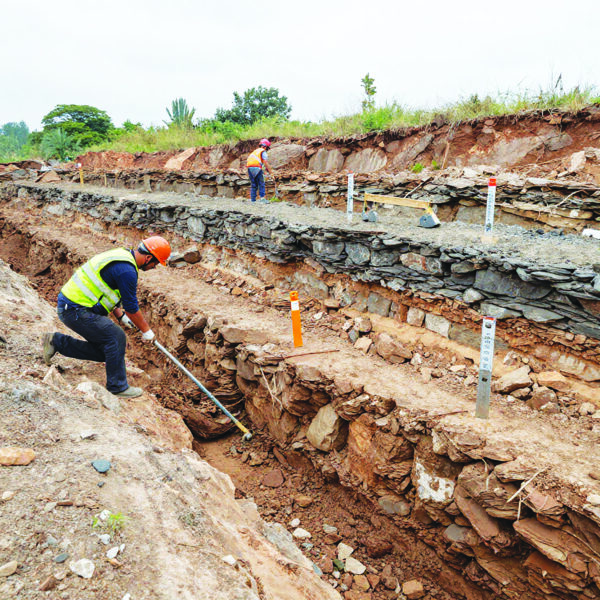
The major challenge faced by the sector is a lack of exploration. Without sustained exploration, there can be no pipeline of new mining projects. Without new projects, the sector cannot grow. South Africa’s exploration activity is overwhelmingly concentrated in brownfield projects, which extend the life of existing mines, rather than greenfield exploration, which is essential for discovering new deposits.
“If you don’t explore, you don’t find. And if you don’t find, you don’t build new mines,” explained Motsa. The scale of the challenge is significant. South Africa has set a target to capture 5% of global exploration expenditure, yet actual investment falls far short of this ambition. Between 2010 and 2024, the cumulative exploration funding gap has reached approximately R80.9-billion. “We are simply not investing enough into the pipeline of future mines. The gap is not theoretical. It is already impacting future production.”
Junior miners
Globally, junior mining companies play a critical role in driving exploration. Typically backed by venture capital, these companies focus on early-stage exploration and, upon discovery, transfer projects to larger producers.
In South Africa, however, the structure of the junior mining sector differs significantly. Limited access to venture capital has forced junior miners to adopt a broader, more capital-intensive role across the mining value chain, from exploration to production.
“Our juniors are not just explorers. They are trying to do everything. That’s not how the ecosystem is meant to function. Traditional mining houses did exploration in-house. In those 150 years of success in South Africa, we built several successful big mining houses, which developed the balance sheets that could fund exploration in-house,” shared Dr Manie Kriel, CEO, VBKOM Consulting.
“Up-and-coming, junior, mid-tier mining houses simply don’t have those sorts of balance sheets to explore at the same level. So that’s maybe one of the reasons why we’ve contracted from 8% to 0.5% – it takes decades to establish the likes of an Anglo American BHP Bullet, and the gold fields and the like. S&P, Global Market Intelligence shows that the duration of developing a mine is between 15 and 20 years. It’s not a short-term investment, and we know it’s very capital-intensive,” he added.
While this reflects resilience, it also exposes a structural weakness. Without a dedicated exploration funding ecosystem, junior miners are unable to operate with the agility and focus seen in more mature mining jurisdictions. The result is a sector that is overstretched and underfunded, limiting its ability to act as a true engine of growth.
Policy uncertainty and investor perception
Beyond funding constraints, investor sentiment remains a critical barrier. South Africa’s global competitiveness as a mining investment destination has declined, with the country ranking 57th out of 68 jurisdictions in terms of overall investment attractiveness.
More concerning is its performance on policy perception indicators, where it has consistently ranked in the bottom quartile. “Investors are comparing jurisdictions all the time. If there is uncertainty here, capital will simply go elsewhere. I think one of the other issues is infrastructure, as well as how investors perceive South Africa and the risk associated with the mining sector in South Africa. Investor perceptions do matter,” added Kriel.
These indicators reflect broader concerns around regulatory uncertainty, administrative inefficiencies, and governance challenges. In a globally competitive environment, predictability is as important as resource potential.
Bridging the gap
Addressing South Africa’s exploration deficit will require targeted and co-ordinated intervention. While various funding mechanisms exist, many represent one-off or stock-based commitments rather than sustained annual investment flows. “We often talk about funding as if it’s a flow, but much of it is one-off capital. That makes the gap even more significant than it appears,” explained Francois Janse van Rensburg, from Milpark Business School.
There is growing support for exploration-specific financial instruments, such as flow-through shares, which have proven effective in other jurisdictions in attracting high-risk exploration investment. Equally important is the need for regulatory reform. “Improving policy certainty would go a long way in unlocking investment. Capital is available globally. It just needs the right conditions,” said Janse van Rensburg.
Exploration is a leading indicator of future mining activity. The absence of greenfield exploration today signals a decline in production, employment and economic contribution tomorrow. At the same time, global demand for minerals, particularly those linked to the energy transition, continues to rise. South Africa is well positioned, from a resource perspective, to play a significant role in meeting this demand. However, without decisive action, the country risks missing this opportunity.
“South Africa has the geology. The question is whether we can create the environment to unlock it,” asked the panellists. Unlocking the full potential of the sector will depend not only on what lies beneath the ground, but on the policy, investment and institutional environment above it.
By Sharon Mdaka