
The Chief Executive Officer of the Ghana Chamber of Mines, Ing. Kenneth Ashigbey, has called for a fundamental shift in Ghana’s approach to localisation in the mining industry, saying the country must move beyond employing Ghanaians to developing the expertise and technology needed to shape the future of mining.
He said true localisation should involve knowledge transfer, technological competence, research capability and the development of Ghanaian intellectual property that can compete globally.
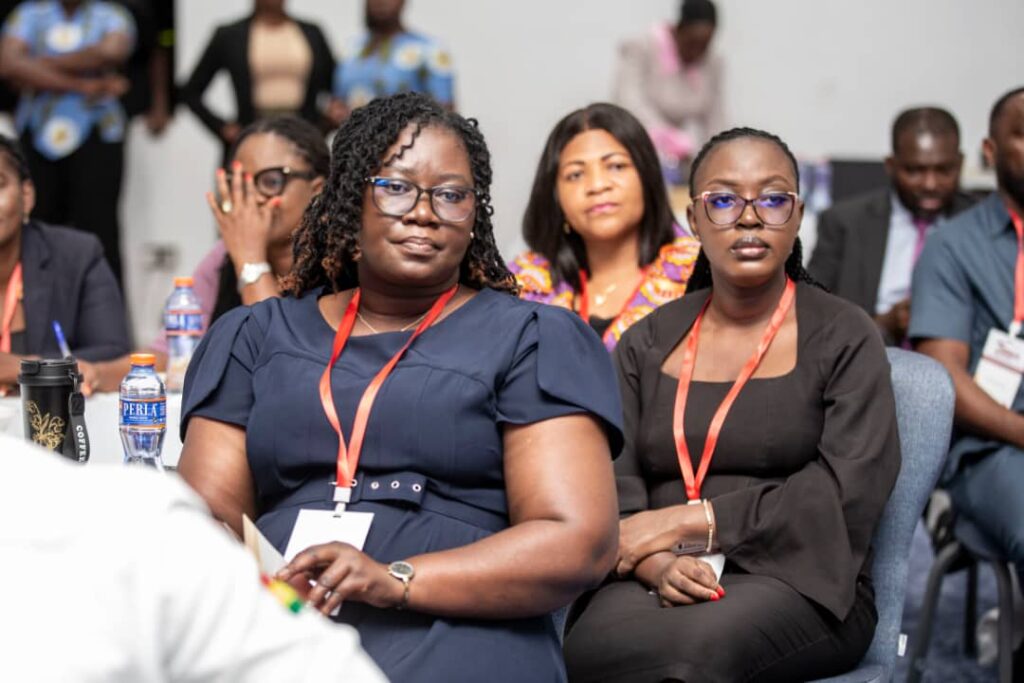
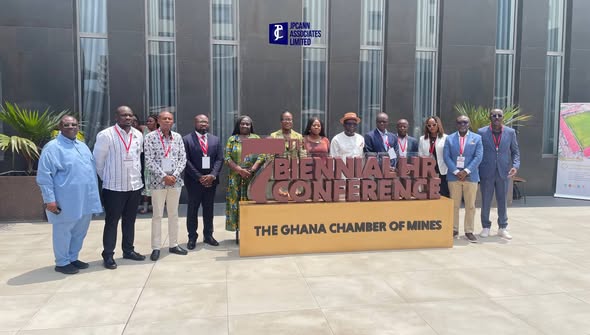
Ing. Ashigbey was speaking at the opening of the 7th Biennial Human Resource Conference of the Ghana Chamber of Mines on Thursday, August 20, 2026, at The Palm by Eagles Hotel.
The conference is being held on the theme, “Future-Ready People: Building the Workforce for Ghana’s Next Era of Mining.”
According to him, Ghana’s mining industry must begin asking whether Ghanaians are merely operating imported technologies or developing the capacity to design and improve them.
“Are we operators of imported technology or are we learning to design it? Are we maintaining equipment or are we learning to manufacture components?” he asked.
He also questioned whether Ghanaian engineers and programmers were developing mining applications and algorithms or merely consuming software and analysing data generated by technologies developed elsewhere.
Ing. Ashigbey said this should define the next phase of localisation, arguing that Ghanaian professionals must eventually be able to compete confidently with the best mining experts anywhere in the world.
He said Ghana was well positioned to use its mining industry as a platform for broader industrialisation because the sector brings together geology, engineering, technology, energy, manufacturing, finance, logistics, environmental science and data science.
“Properly positioned, it can become an industrial classroom for Ghana and Africa,” he said.
He noted that mining companies already create significant demand for goods and services, with producing member companies of the Chamber spending approximately GH¢7.1 billion on goods and services in 2025.
He said that demand could provide opportunities for Ghanaian businesses to move beyond supplying basic goods and services to designing, manufacturing and maintaining sophisticated mining equipment and technologies.
“There can be no local manufacturing without local skills. There can be no local technology transfer without people capable of receiving and improving technology. There can be no industrial revolution without human capital,” he said.
Preparing workers for automation
Ing. Ashigbey also urged mining companies to prepare their employees for rapid advances in artificial intelligence, robotics, automation, data analytics and other emerging technologies.
He said the traditional human resource function, which focuses largely on determining how many employees an organisation needs, must give way to a system that identifies the capabilities required for the future.
“The future-ready HR function must ask, what capabilities do we need?” he said.
He explained that future mining professionals would require increasingly diverse skills.
Drilling engineers, for instance, may need data analytics capabilities, while maintenance technicians could require expertise in sensors and predictive systems. Processing engineers may increasingly work alongside artificial intelligence, while environmental professionals could rely on drone imagery, satellite systems and real-time monitoring.
He urged HR professionals to prepare employees for jobs that may not yet exist rather than designing training programmes only around current vacancies.
“The danger, therefore, is not that machines will learn. The greater danger is that our people will stop learning,” Ing. Ashigbey said.
He said future-ready employees would need the ability to “learn, unlearn and relearn” quickly, alongside curiosity, adaptability, critical thinking, digital confidence, collaboration, creativity and ethical judgement.
Mining workforce already largely Ghanaian
Ing. Ashigbey said producing member companies of the Ghana Chamber of Mines directly employed 13,890 Ghanaians in 2025, representing 97% of their total workforce.
He said while the figure was encouraging, the industry must now focus on the nature and level of participation of Ghanaians in mining technology.
“The question is, what level of mining technology are Ghanaians participating in?” he asked.
He said Ghana must ensure that its workforce is increasingly involved in developing mining technologies, intellectual property and solutions that can be exported beyond the country.
Stronger industry-academia collaboration
The Chamber of Mines CEO also called for stronger collaboration between mining companies and academic institutions to prepare graduates for the changing demands of the industry.
He proposed a “revolving door” between academia and industry, where experienced mining professionals could periodically teach in universities while researchers and students gain meaningful exposure to operational challenges.
He said industrial attachments should go beyond observation and involve students in solving real mining problems.
He also called for research projects to originate from challenges faced in mines, with universities and industry working together to develop practical solutions.
According to him, this movement of knowledge between mines, universities, experienced professionals and young innovators would help create a stronger mining technology ecosystem.
Building a culture of innovation
Ing. Ashigbey further challenged mining companies to create workplaces where employees can experiment, question existing practices and develop new ideas without fear of punishment for failure.
He said innovation would be difficult in organisations where employees were afraid to challenge established practices.
He stressed, however, that experimentation must take place within safe and disciplined environments, particularly given the safety requirements of the mining industry.
He urged companies to create “sandbox” environments where employees can safely test new technologies and approaches.
He also called for continuous workplace learning through micro-learning, technical certification, mentoring, cross-functional assignments and exposure to emerging technologies.
Ing. Ashigbey said Ghana’s ability to lead the next era of mining would ultimately depend on whether the country invests sufficiently in its people.
“The minerals, they come from Africa. The technologies can come from Africa. Research can come from Africa. The solutions can come from Africa. The people leading the next generation of mining should come from Africa,” he said.
He said the country must therefore not merely prepare a workforce that can adapt to the future but one capable of creating it.
Reporting by Abigail Teye in Accra