Illegal gold mining has become one of organized crime's most profitable businesses, surpassing cocaine as a source of revenue for some criminal groups and exposing financial institutions, refiners and governments to a rapidly growing illicit finance threat. For decades, cocaine defined organized crime across Latin America. Today, soaring gold prices and weaker enforcement have transformed …
Illegal gold mining overtakes cocaine as lucrative crime, expert warns
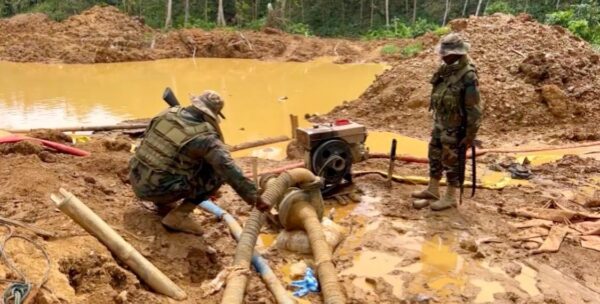
Illegal gold mining has become one of organized crime’s most profitable businesses, surpassing cocaine as a source of revenue for some criminal groups and exposing financial institutions, refiners and governments to a rapidly growing illicit finance threat.
For decades, cocaine defined organized crime across Latin America. Today, soaring gold prices and weaker enforcement have transformed illegal mining into a lower-risk, higher-return enterprise, according to Julia Yansura, Program Director for Environmental Crime and Illicit Finance at the FACT Coalition.
“Illicit gold has become a low-risk, high-reward business,” Yansura told MINING.COM. “It generates enormous profits with a much lower likelihood of detection or prosecution than the illicit drug trade.”
The shift reflects a broader transformation in organized crime. Rather than relying primarily on narcotics, criminal organizations have diversified into activities including illegal mining, extortion, weapons trafficking and other illicit enterprises, pursuing markets that offer the highest returns with the lowest risk of detection.
Governments, however, have been slower to adapt. Decades of investment in anti-narcotics enforcement have left illegal mining comparatively overlooked, allowing criminal groups to expand operations that finance wider criminal activities while causing extensive environmental damage.
Ecuador has become one of the clearest examples of this trend. The country’s 2026–2029 National Security Plan elevates illegal mining from an environmental and regulatory issue to a national security threat after concluding that criminal gangs have infiltrated the gold supply chain from extraction to export.
Authorities say illicit gold now finances organized crime, fuels money laundering and is increasingly replacing cocaine as a key source of criminal revenue.
Laundering gold
Unlike cocaine, illegally mined gold can be integrated into legitimate supply chains, making it particularly attractive to organized crime.
Yansura said illicit gold is often laundered close to the mine using forged documents or false identities before entering legitimate markets. By the time refiners, traders or banks encounter the metal, it frequently appears legitimate on paper.
She also highlighted the “hand-carry” loophole. While travellers entering or leaving the United States must declare cash exceeding US$10,000, comparable reporting requirements do not apply to gold bars, allowing criminal organizations to move high-value gold across borders with far less scrutiny.
The financial risks extend well beyond mining regions. Although transactions near illegal mines often involve cash, gold or cryptocurrency, exports are typically financed through the international banking system, exposing financial institutions to illicit finance risks.
A recent WWF-UK and Themis survey of more than 600 financial professionals across 22 countries found that over 80% of financial institutions are exposed to illicit finance risks linked to illegal mining, yet 40% have not taken steps to address them.
The exposure is particularly significant in the United States. FACT Coalition research found that the country is the largest destination for Colombian gold exports, even though an estimated 80% of Colombia’s gold is believed to be illegally or criminally sourced.
Yansura said the response should focus as much on financial crime as on environmental enforcement. She called for stronger beneficial ownership rules to prevent shell companies from concealing illicit transactions, making transnational illegal gold mining a predicate offence for money laundering under US law, and closing customs loopholes that allow high-value gold to cross borders with limited disclosure.
“Governments need to follow not just the gold, but the money,” Yansura said. “That’s how we disrupt the criminal networks behind this trade rather than simply addressing the immediate environmental consequences.”
Credit: Mining.com