Do not always smell the elephant. Pause, read, learn, and understand. In the past few days, news has circulated that the Minerals Commission has requested mining companies to transfer certain operations to local contractors. As usual, the conversations have been divided along partisan lines. While one side supports the move, others have been critical, often …
Kenneth Bansah:Enforcing local content, a turning point for Ghana’s mining sector
Do not always smell the elephant. Pause, read, learn, and understand.
In the past few days, news has circulated that the Minerals Commission has requested mining companies to transfer certain operations to local contractors. As usual, the conversations have been divided along partisan lines. While one side supports the move, others have been critical, often suggesting that there is a “big elephant in the room.”
But is there really a smelly elephant in the room? This short piece provides some context, and readers can make up their own minds.
Let us start with a bit of background.
Large-scale mining in Ghana has been ongoing for more than 100 years. Historically, mining operations relied heavily on expatriates and foreign service providers. At a point, most aspects of mining and its supporting services were dominated by foreign companies and individuals. Local participation was limited, and many Ghanaians did not fully benefit from the sector.
We must also remember what happens after mining ends. Investors and operators leave, and in many cases, the communities that hosted these operations struggle to sustain economic benefits. This issue is part of what is often described as the resource curse.
To address this gap, the government enacted the Minerals and Mining (Local Content and Local Participation) Regulations, 2020. This enactment came after decades of mining activity in the country. The aim is to promote job creation, build local capacity, and ensure that Ghanaians benefit more directly from their mineral resources through the use of local expertise, goods, and services.
However, even after the introduction of these regulations, estimates suggest that a significant portion of high-value mining services is still not handled by local companies. This situation means that a substantial share of associated value continues to be captured outside the local economy.
For context, industry reports indicate that Ghana’s mining sector recorded billions of dollars in local spending in recent years. Yet, the broader economic impact does not always reflect this level of expenditure, largely because high-value services and associated revenues are not sufficiently retained within the local economy.
Having worked within mining systems outside Ghana, I have seen how strong local participation and effective enforcement can help retain value within an economy. This outcome is not theoretical. It is practical and achievable.
So what is the regulator doing now?
In February 2026, the Minerals Commission launched reforms to strengthen local content implementation and has since begun enforcing them. We often complain about weak enforcement of regulations. Now that enforcement is taking place, should we still complain?
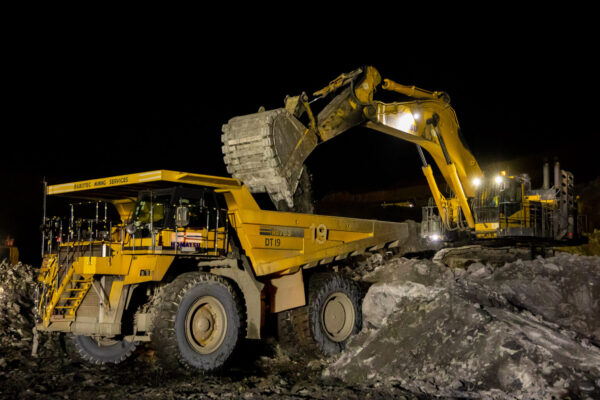
The current directive requires mining companies to comply with local content laws, including transitioning specific mining operations to local contractors. This requirement does not mean handing over entire mines. It focuses on key operational areas such as drilling, blasting, and hauling, which are high-value components of mining.
There have been concerns about worker welfare, capacity, and the readiness of local firms. These concerns are valid. However, they are not reasons to abandon the policy. They are issues that regulators must address through proper oversight, clear standards, and strict enforcement of contract terms.
Ultimately, enforcing local content laws means more opportunities for local businesses and professionals. It means more jobs, more skills development, and more value retained within the country.
Our great-grandparents saw these mines and gained little lasting benefit. Today, there is a deliberate effort to change that story. This is not the time to stand on the sidelines and complain without direction. It is a time to prepare, position ourselves, and participate.
As for me, I am ready to contribute. This is the time for professionals and investors to step forward, combine capital with expertise, and build something that benefits the country.
Do not wait until all the meat is gone before you scramble for the bones.
By Kenneth Bansah, PhD, PE