Mechanisation in Ghana’s artisanal and small-scale mining (ASM) sector is improving productivity but is also displacing women from core mining activities and pushing them into lower-paid and less secure work, a new study has found.
The study, titled “Mechanization, gender, and livelihoods in artisanal and small-scale mining: a technofeminist political ecology perspective,” was conducted by Kenneth Joseph Bansah of Mining & Community Research, Ghana, based on field investigations in mining communities in southwestern Ghana.
It finds that the adoption of excavators, washing plants, motorised pumps, trommels and leaching techniques is not gender neutral.
According to the study, while mechanisation has increased efficiency and productivity in ASM, it has simultaneously reduced women’s participation in core mining activities in which they have historically played important economic roles.
Women are increasingly being pushed into ancillary and informal activities, which the study says often provide lower and less sustainable incomes.
The study also links the changing pattern of work to increased environmental and health risks for women in mining communities.
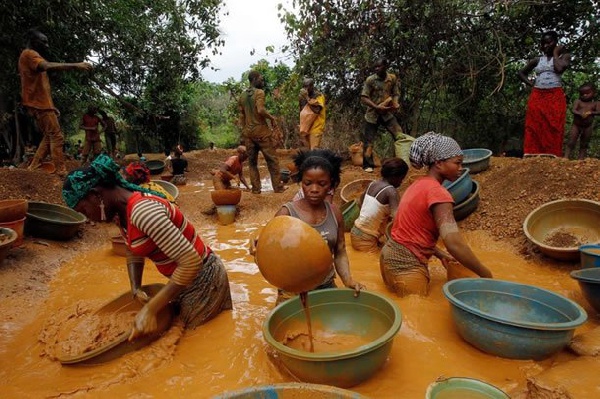
Women in Ghana’s ASM sector have traditionally participated in activities including prospecting, digging, carrying loads, sluicing and mineral recovery, while others support mining operations through food vending, water sales, trading and the supply of goods and services.
The study notes that women are estimated to constitute about half of Ghana’s ASM workforce, although official gender-disaggregated data remain limited.
It argues that the transition from rudimentary tools such as pickaxes, shovels and hammers to heavy machinery has reduced the physical demands of mining and improved production efficiency, but has also altered access to employment and income opportunities.
Globally, ASM directly employs nearly 45 million miners and supports more than 300 million people when indirect workers and livelihood dependents are included, according to the study, citing World Bank data.
The research introduces a Technofeminist Political Ecology (TPE) framework to examine these changes. The framework treats technology not simply as a neutral instrument of progress but as a force that can restructure labour, redistribute environmental risks and alter gender-based vulnerabilities in extractive economies.
The study argues that policies promoting mechanisation in ASM therefore need to consider its different impacts on men and women, particularly where women depend on mining for household livelihoods.