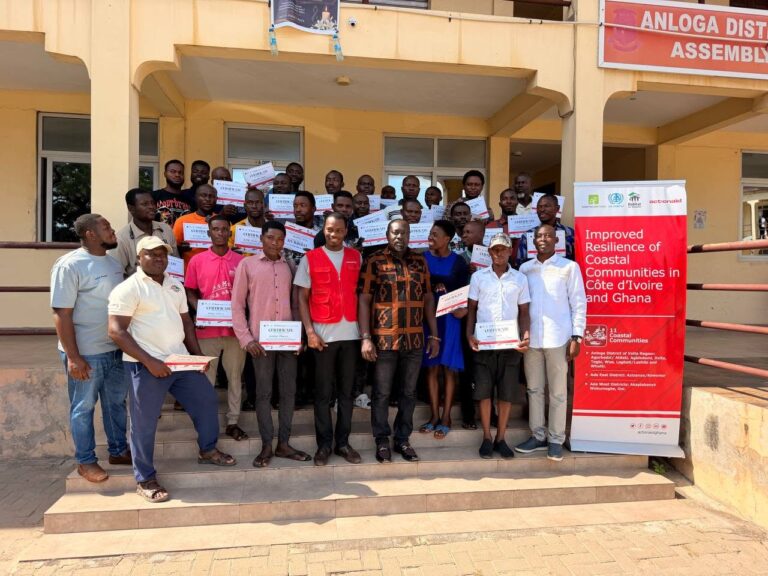
Fifty-three artisans from vulnerable coastal communities in the Greater Accra and Volta regions have received specialised training in climate-resilient housing as part of efforts to strengthen communities’ ability to cope with climate-related risks. The beneficiaries comprise 21 masons, 21 carpenters and 11 plumbers from Ada East, Ada West and Anloga. The training was organised by …
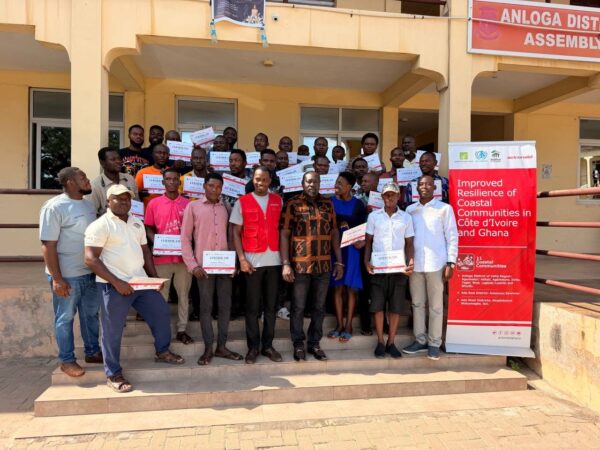
Fifty-three artisans from vulnerable coastal communities in the Greater Accra and Volta regions have received specialised training in climate-resilient housing as part of efforts to strengthen communities’ ability to cope with climate-related risks.
The beneficiaries comprise 21 masons, 21 carpenters and 11 plumbers from Ada East, Ada West and Anloga.
The training was organised by ActionAid Ghana in partnership with UN-Habitat and Habitat for Humanity Africa, with support from the Adaptation Fund under the Improved Resilience of Coastal Communities in Côte d’Ivoire and Ghana (IRCC) project.
The programme is aimed at equipping local artisans with practical skills to support the construction of homes that can better withstand flooding, saltwater intrusion, extreme weather and other climate-related hazards.
Ghana’s coastal communities are increasingly exposed to risks including sea-level rise, coastal erosion, tidal flooding, saltwater intrusion, intense rainfall, storm events and changing rainfall patterns.
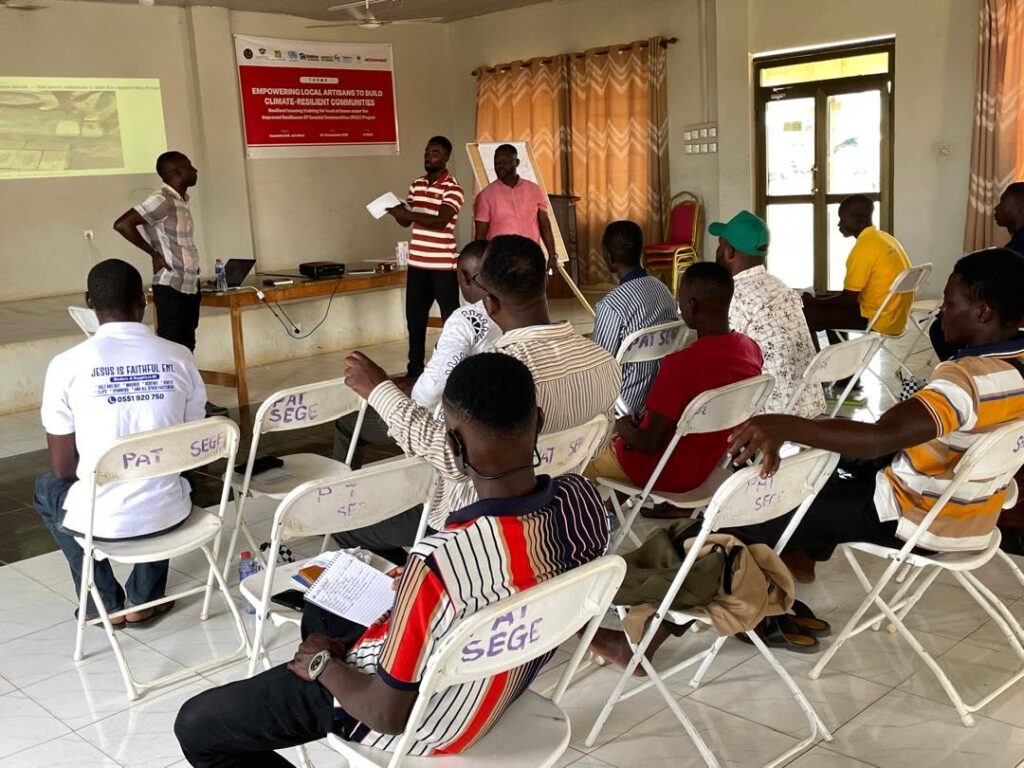
These pressures are also affecting livelihoods, particularly among fishing and farming households, while placing additional pressure on coastal land, ecosystems and access to resilient infrastructure and housing.
ActionAid Ghana and its partners said the training is intended to strengthen locally led adaptation while creating livelihood opportunities for artisans in vulnerable communities.
The programme also placed emphasis on inclusion and gender equality, with organisers highlighting the participation of women in the skills development initiative.
ActionAid Ghana said increasing women’s access to skills, knowledge and economic opportunities can support their participation in building more resilient and sustainable coastal communities.
The IRCC project is being implemented in Ghana and Côte d’Ivoire with the aim of improving the resilience of coastal communities to climate-related risks.