The Ghana Chamber of Mines has defended Gold Fields’ application to extend the Tarkwa mining lease, arguing that the Tarkwa mining enclave remains one of Ghana’s biggest sources of national revenue and warning against policy decisions that could destabilise the country’s mining sector. At a press briefing on Thursday, May 14, 2026, the Chamber mounted …
Ghana Chamber of Mines cautions against rejecting Gold Fields Tarkwa lease renewal
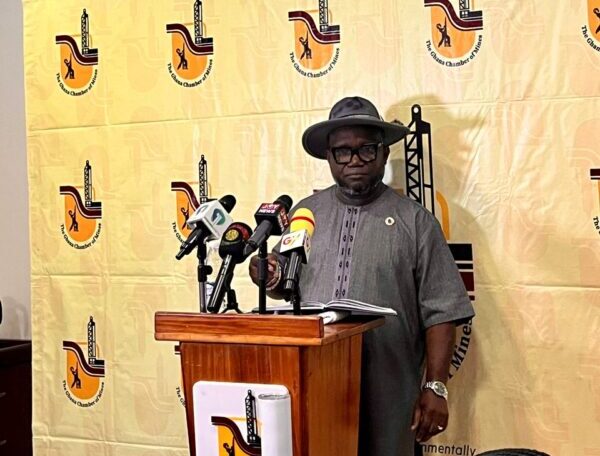
The Ghana Chamber of Mines has defended Gold Fields’ application to extend the Tarkwa mining lease, arguing that the Tarkwa mining enclave remains one of Ghana’s biggest sources of national revenue and warning against policy decisions that could destabilise the country’s mining sector.
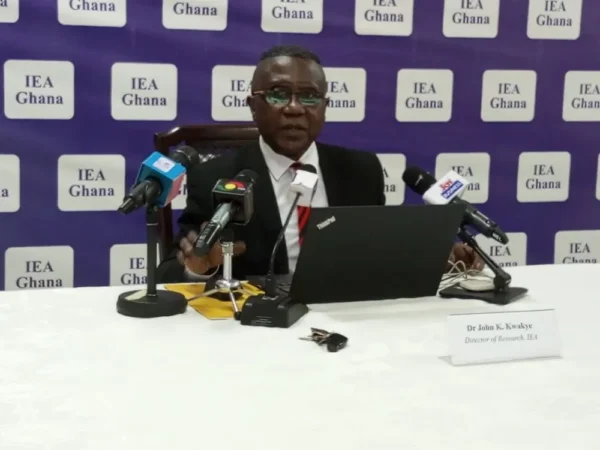
At a press briefing on Thursday, May 14, 2026, the Chamber mounted a detailed rebuttal to the Institute of Economic Affairs’ (IEA) call for government to reject the proposed lease extension when the current concession expires in 2027.
Central to the Chamber’s argument was the significant tax contribution generated from mining activities in Tarkwa.
Using Tarkwa as an example, Chief Executive Officer of the Chamber, Ing. Kenneth Ashigbey, disclosed that Gold Fields, Ghana Manganese Company and AngloGold Ashanti Iduapriem together paid approximately GH¢5.1 billion in taxes in 2024 alone.
According to him, the amount represented about 7.3 percent of the Ghana Revenue Authority’s total direct domestic tax collections for the year, underscoring the strategic importance of the Tarkwa mining enclave to Ghana’s economy.
“Few geographical locations contribute as significantly to national revenue mobilisation as Tarkwa,” Dr. Ashigbey stated.
The Chamber argued that calls to reject the Tarkwa lease renewal must therefore be approached carefully, warning that disrupting existing mining investment arrangements could threaten revenue generation, investor confidence and long-term sector stability.
The rebuttal follows a press conference by the IEA on Wednesday, where former Chief Justice Sophia Akuffo called on government not to renew Gold Fields’ lease and instead pursue greater Ghanaian ownership and control of strategic mining assets.
Sophia Akuffo maintained that Ghana possesses the technical expertise and indigenous mining firms capable of independently managing major concessions.
She argued that Ghanaian companies such as Engineers and Planners, Heath Goldfields Limited and Rocksure International Limited are already undertaking substantial mining operations on behalf of multinational firms.
“We have trained very well-equipped people in this country who can manage indigenous mining concessions, not only Tarkwa but every mine in this country,” she stated.
She further argued that many Ghanaian firms are already deeply involved in core operational activities within the mining sector.
“Indeed, many large-scale mining operations in Ghana are already being managed by indigenous firms such as Engineers and Planners, Heath Goldfields Limited and Rocksure International Limited on behalf of foreign mining concessionaires,” Sophia Akuffo added.
However, the Chamber rejected suggestions that Ghana should move away from its current private investment-led mining model, insisting that history shows state-dominated mining operations previously failed.
According to Dr. Ashigbey, before Gold Fields took over Tarkwa, the mine operated under the State Gold Mining Corporation during the post-independence era of state ownership and nationalisation.
He said that period witnessed severe operational inefficiencies, declining output, chronic underinvestment and financial losses that nearly collapsed the mining sector.
The Chamber argued that the deterioration of Ghana’s mining industry during that era significantly contributed to broader economic decline and eventually forced Ghana into an International Monetary Fund-supported structural adjustment programme in 1983.
“The facts do not support the IEA’s assertion that if Ghana’s gold resources are in state hands we will not go to the IMF,” Dr. Ashigbey stated.
“If that were true, countries without natural resources like Singapore would perpetually be poor. What keeps countries away from the IMF is prudent management of resources and productive partnerships between the state and private capital.”
The Chamber further credited private sector reforms introduced in the 1980s for restoring investor confidence and reviving Ghana’s mining industry.
According to Dr. Ashigbey, companies such as Gold Fields invested heavily in mine rehabilitation, exploration, technology and operational modernisation, helping Ghana emerge as Africa’s leading gold producer.
He revealed that gold production from the large-scale mining sector increased from about 216,000 ounces in 1983 to nearly three million ounces in 2025.
The Chamber also disputed claims that foreign mining companies disproportionately benefit from Ghana’s mineral wealth at the expense of the country.
Dr. Ashigbey explained that Ghana’s fiscal regime allows the state to retain more than 60 percent of mining rents through royalties, corporate taxes, growth and sustainability levies, withholding taxes and carried interest arrangements.
According to him, Ghana’s royalty structure remains among the highest globally, especially at current gold prices exceeding US$4,600 per ounce.
Despite defending mining companies, the Chamber acknowledged concerns about underdevelopment in many mining communities, including Tarkwa.
Dr. Ashigbey argued that the real problem lies in Ghana’s mineral revenue distribution framework, where most mining revenues flow to central government while host communities receive relatively limited allocations.
He disclosed that the Chamber has consistently advocated reforms that would allocate at least 30 percent of mineral royalties directly to mining communities.
“We believe Ghana needs a framework similar to the Petroleum Revenue Management Act for the mining sector,” he stated.
The Chamber also highlighted corporate social investments undertaken by Gold Fields through the Gold Fields Ghana Foundation.
According to Dr. Ashigbey, the foundation has invested more than US$100 million in projects covering education, healthcare, roads, agriculture, water systems and sanitation since 2002.
Some of the projects include the Tarkwa-Damang road, bypass roads in surrounding communities and the expansion of the Apinto Government Hospital into a modern medical facility estimated at US$16.4 million.
Dr. Ashigbey insisted that such long-term investments require stable policies and security of tenure for mining companies.
While acknowledging the need for increased Ghanaian participation in mining, the Chamber warned that abruptly altering concession ownership structures without careful analysis could undermine one of Ghana’s most important sources of revenue, employment and foreign exchange.
Reporting by Abigail Teye in Accra