Founder of policy think tank IMANI Africa, Franklin Cudjoe, has called on the government to provide additional resources to strengthen the protection of the Atewa Range Forest Reserve against illegal mining. His comments follow renewed calls by environmental groups for the government to urgently begin the process of declaring the Atewa Forest a National Park …
IMANI boss calls for 24/7 protection of Atewa Forest against illegal mining
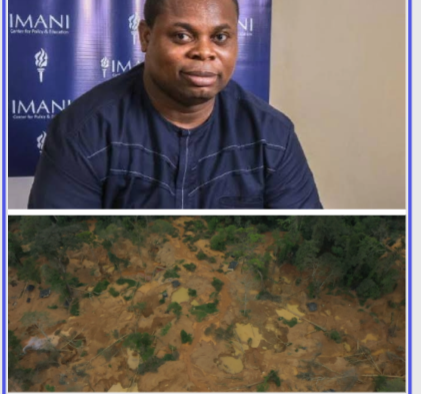
Founder of policy think tank IMANI Africa, Franklin Cudjoe, has called on the government to provide additional resources to strengthen the protection of the Atewa Range Forest Reserve against illegal mining.
His comments follow renewed calls by environmental groups for the government to urgently begin the process of declaring the Atewa Forest a National Park amid concerns over illegal mining activities in the reserve.
In a Facebook post on Tuesday(15 September), Mr Cudjoe appealed to the Minister of Lands and Natural Resources, Emmanuel Armah-Kofi Buah, to prioritise the protection of the forest and ensure adequate personnel are deployed to safeguard it.
“My dear hardworking Honourable Emmanuel Armah-Kofi Buah, minister of lands and natural resources, please do all you can to save Atewa Range Forest Reserve from plunderous illegal miners,” he said.
Mr Cudjoe expressed concern over what he described as inadequate personnel protecting the reserve, saying only a third of the required force of forest guards and personnel from the National Anti-Illegal Mining Operations Secretariat (NAIMOS) was currently available.
“It is unpardonable to learn that only a third of the critical force (forest guards and NAIMOS) is protecting the Reserve,” he said.
He urged the government to provide sufficient funding to recruit what he described as the optimum number of guards to enable the reserve to be protected around the clock.
“We must ensure that there is adequate financial resources to recruit the optimum number of guards to protect the Reserve 24/7!” he said.
Mr Cudjoe also linked the call for increased funding to Ghana’s gold revenues, asking whether additional resources could be allocated to protect the country’s critical forest reserves.
“After all aren’t we making billions out of gold already? Please let us ask for more resources,” he said.
He further urged the Lands and Natural Resources Minister to make the protection of forests and the fight against illegal mining a major part of his legacy.
“You have to leave a legacy thrice what you came to meet. You are half way there. Please rededicate all your strength to end at least 80% of galamsey. It is doable,” Mr Cudjoe said.
His comments come after A Rocha Ghana, the Concerned Citizens of the Atewa Landscape (CCAL) and Eco-Conscious Citizens called for Atewa to be declared a National Park.
Speaking at a press conference in Accra on September 14, Deputy National Coordinator of A Rocha Ghana, Daryl Bosu, said illegal mining had become the biggest threat to Ghana’s forests.
“Within the last 10 years, the biggest threat to our forestry business now is mining, legal and illegal,” Mr Bosu said.
He said mining could destroy forest cover at a rapid pace and called for urgent government action to secure Atewa.
The groups said the call for National Park status did not imply that the designation could be completed immediately, but rather that the government should begin and expedite the necessary processes.
They also called for communities, civil society organisations and relevant state institutions to be involved in determining how the forest would be managed and how surrounding communities could continue to benefit from it.
A Rocha Ghana says the approximately 26,300-hectare Atewa Forest, gazetted as a protected reserve in 1926, contains the headwaters of the Ayensu, Densu and Birim rivers and more than 99 streams.
The organisation estimates that the forest provides water for more than five million Ghanaians and supports significant biodiversity, including at least 78 globally threatened species.
The environmental groups have also called for a permanent and adequately resourced security operation, improved logistics for the Forestry Commission and faster prosecution of suspected illegal miners.
They are further demanding investigations into alleged information leaks, selective enforcement and possible complicity in illegal mining activities within the reserve.