Ghana has commissioned an upgraded National Seismic Monitoring Network to enhance earthquake detection, monitoring and disaster preparedness across the country. The modernised system, unveiled by the Ghana Geological Survey Authority (GGSA) under the Ministry of Lands and Natural Resources, is capable of transmitting real-time seismic data to improve the country's response to earthquake activity. Speaking …
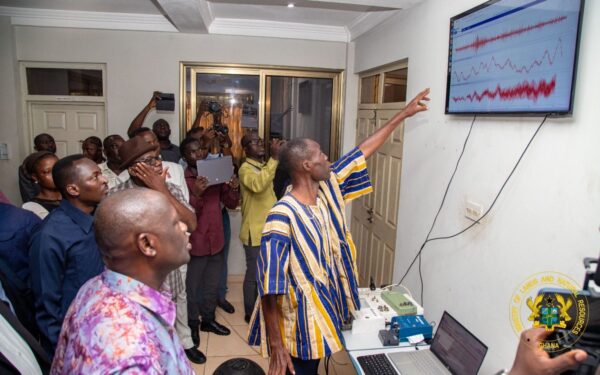
Ghana has commissioned an upgraded National Seismic Monitoring Network to enhance earthquake detection, monitoring and disaster preparedness across the country.
The modernised system, unveiled by the Ghana Geological Survey Authority (GGSA) under the Ministry of Lands and Natural Resources, is capable of transmitting real-time seismic data to improve the country’s response to earthquake activity.
Speaking at the commissioning ceremony on Tuesday, Lands and Natural Resources Minister Emmanuel Armah-Kofi Buah said seismic preparedness had become a national priority, noting that key infrastructure such as Tema Port, Kotoka International Airport and the Akosombo Dam are located on or near active fault lines.
He said recent earth tremors recorded between 2018 and 2023 underscore the need for stronger preparedness measures, particularly in Accra, Ghana’s most seismically active region.
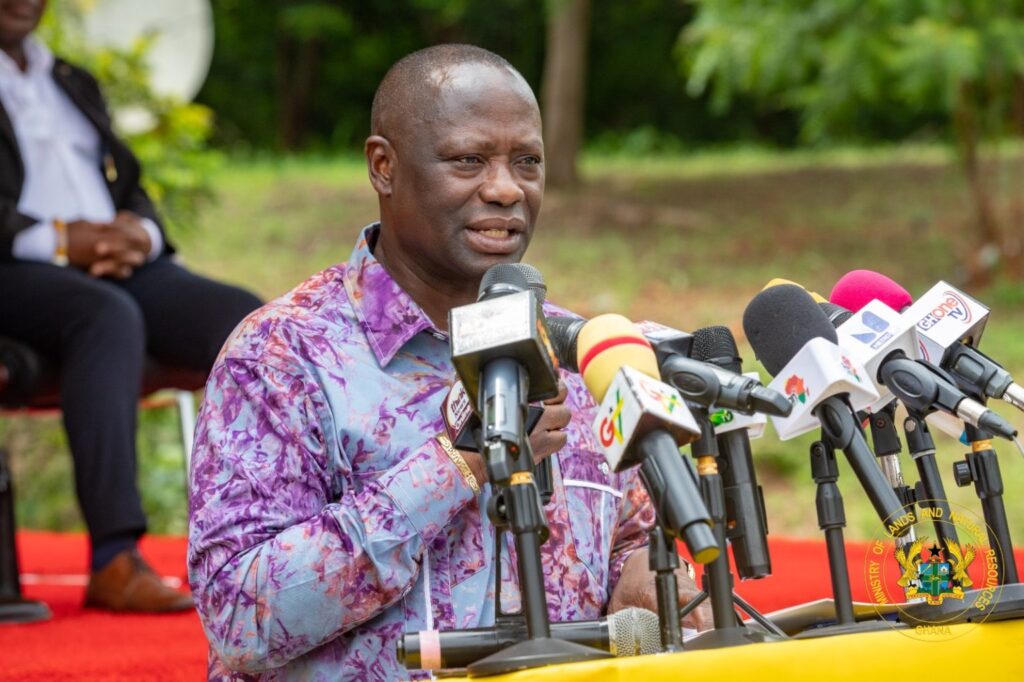
To strengthen resilience, the Minister announced plans for mandatory seismic assessments for building permits, annual structural audits of critical infrastructure, stricter enforcement of the Ghana Building Code and intensified public education on earthquake safety.
GGSA Director-General Dr Prosper Akaba said 20 of Ghana’s 21 seismic stations have been upgraded with modern equipment, including broadband seismometers, strong-motion accelerographs and advanced telemetry systems.
He added that the remaining station at Asankragua will be completed once security concerns are addressed.
According to GGSA, the upgraded network will provide more accurate scientific data to support hazard assessments, infrastructure planning and the protection of lives and property