The fight against galamsey started about 40 years ago. The first major action came in the late 1980s, when the Small-Scale Gold Mining Law of 1989 (PNDCL 218) was enacted. While it was not a comprehensive law to govern the rapidly evolving artisanal and small-scale mining sector, it provided an important foundation for regulating and …
Kenneth Bansah: Ghana’s 40-year fight against galamsey, lessons from PNDCL 218
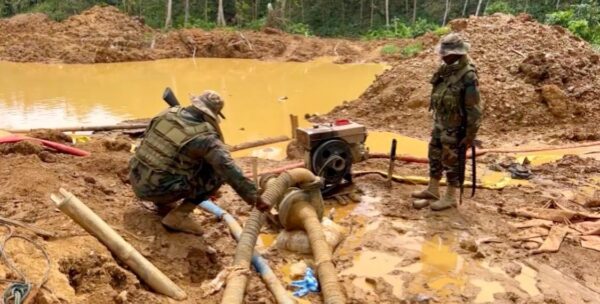
The fight against galamsey started about 40 years ago. The first major action came in the late 1980s, when the Small-Scale Gold Mining Law of 1989 (PNDCL 218) was enacted.
While it was not a comprehensive law to govern the rapidly evolving artisanal and small-scale mining sector, it provided an important foundation for regulating and regularizing galamsey.
Under the law, it was not called galamsey. It was called small-scale mining. Anyone who wanted to undertake this type of mining was required to obtain a licence. Mining without the required licence was an offence; the reason galamsey is now commonly used synonymously with illegal mining.
The law also said that small-scale mining must be conducted by Ghanaians only. No other nationals were allowed under the law to undertake small-scale mining.
A Ghanaian also had to be at least 18 years old before they could seek a small-scale mining licence from the Minerals Commission.
The Minerals Commission established support offices in major mining areas to assist small-scale miners and provide technical support. The broader objective was to bring small-scale mining into the formal system and promote responsible mining practices.
Despite these efforts, galamsey continued unabated.
The law has since been repealed, and subsequent laws governing the small-scale mining sector have been introduced and amended several times. PNDCL 218 was eventually repealed in 2006 by the Minerals and Mining Act, 2006 (Act 703).
The drafters of PNDCL 218 had some foresight. They recognized that the growing small-scale mining sector needed to be brought into a formal system.
The bigger problem was implementation. The implementers of the law seem to have acted poorly, or better still, did not anticipate that the situation could get out of hand. If the law had been properly implemented and enforced from the beginning, the situation we are dealing with today could have been completely different.
The implementation gaps in previous attempts must serve as important lessons for the current fight against galamsey. Ghana has been fighting this problem for about four decades. We have created laws, institutions, licensing systems, support centres, and many other interventions.
Ghana has tried, but have we implemented what we created?
Go after the kingpins and financiers and remove anyone that the law does not recognize as a participant. Tighten border controls.
Most importantly, create alternative, competitive job opportunities for the young men and women whom these kingpins and financiers enlist for galamsey.
Kingpins and financiers do not go to the mining sites to conduct mining themselves. If the young men and women have something competitive to do, the chain will break and galamsey activities will reduce.
By Kenneth Bansah, PhD, PE