How we feed the future is a critical challenge of our time. Yet too often, the focus remains on land, forgetting that the ocean is already a vital source of nutrition for billions of people. That oversight is costly. The ocean is under growing pressure, with an estimated 60% of the world’s marine ecosystems already …
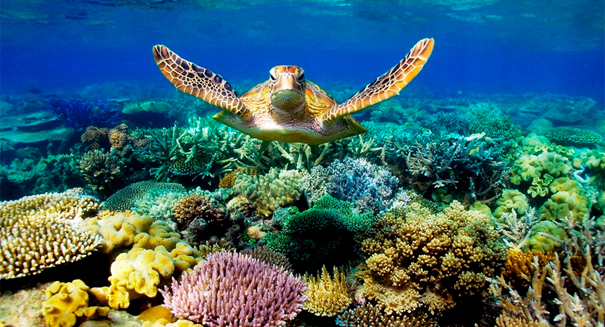
How we feed the future is a critical challenge of our time. Yet too often, the focus remains on land, forgetting that the ocean is already a vital source of nutrition for billions of people.
That oversight is costly. The ocean is under growing pressure, with an estimated 60% of the world’s marine ecosystems already degraded or used unsustainably. This cannot continue.
On April 14, Ghana put ocean protection on the map when the government officially declared the Greater Cape Three Points Marine Protected Area, our country’s first formally designated marine protected area (MPA).
Covering 703.86 square kilometers (nearly 272 square miles) of coastal waters in the Western region, this landmark step will help restore precious marine ecosystems and protect the livelihoods of 21 coastal communities. It is a core element of Ghana’s vision for a “blue future” in which the ocean supports a diversified, sustainable economy.

This is also a milestone in Ghana’s contribution to the global goal of protecting at least 30% of the ocean by 2030 (30×30). With just 10% of the ocean currently designated for protection — and far less being effectively protected — scaling up action worldwide has never been more urgent. Ghana is proud to be stepping forward, and we urge other countries to do the same.
The Greater Cape Three Points area is one of Ghana’s most ecologically and biologically significant marine environments. Its nutrient-rich upwelling waters host critical breeding and nursery grounds for fish species including sardinella, anchovy and mackerel, making the area essential for replenishing fisheries. Meanwhile, coastal wetlands and mangroves play a dual role, protecting shorelines while providing essential habitat for marine life.
These ecosystems are fundamental to life along Ghana’s coast, and to the country’s population at large, with 60% of Ghanaians relying on the ocean for food and income. Ocean health is deeply tied to our economic stability and national well-being, and underpins our cultural heritage.
Yet years of overfishing, illegal practices, pollution, and the worsening impacts of climate change have significantly degraded Ghana’s coastal ecosystems. Take sardinella, once an abundant fish on the Ghanaian coast. Over the past two decades, we have seen a 71.5% decline in sardinella catch in our waters. What was once a cheap and nutritious staple for Ghanaians has become a scarce resource, heavily impacting the communities who earn their livelihoods smoking, drying and trading the fish. With women forming the majority of fish processors, this scarcity has significant implications for gender equality in our country.
These knock-on impacts underscore the true value of our marine environments. They sit at the center of interconnected social, economic, environmental and cultural feedback loops, without which our society could not function. In short, if the ocean cannot thrive, neither can we.
That’s why Ghana is making a bold national commitment to sustainable ocean governance. The designation of our first MPA represents a shift from short-term exploitation to long-term stewardship. It forms part of a broader national strategy to rebuild our fisheries sector, alongside measures such as seasonal fishing closures, a moratorium on fishing licenses, and restrictions on destructive gear.
But designation alone is not enough. Protection must be real, effective and enforced. The new designation introduces a zoning system to deliver this: core zones will be fully protected to allow fish stocks in highly sensitive areas to recover, while multiple-use zones will support regulated fishing and community activity. This approach will be backed by stronger enforcement to tackle illegal fishing, and ongoing scientific monitoring.

Equally important is the role of communities. Coastal communities have been actively involved in the design of the MPA and will co-manage it alongside the government and partners. This ensures that protection is not only effective, but equitable and locally led.
Over time, we expect to see the positive impacts compound. As fish stocks recover, catches should become more stable and sustainable: fishers, processors and traders will see more reliable incomes, food security will strengthen, and new opportunities such as ecotourism will emerge, supercharged by revived biodiversity in the area.
By declaring this MPA, our government hopes to lead by example, showing other countries how effective management of marine ecosystems can unlock real benefits for people, economies and nature. We are proud of our commitment to ocean conservation, but no country can do this alone.
In June, global leaders will gather in Kenya for the Our Ocean Conference, marking the first time it will be held on the African continent. With less than five years to go, this will be a vital moment in our collective journey toward achieving the global goal to protect at least 30% of the planet’s ocean.
We urge governments everywhere to follow in Ghana’s footsteps to protect more of our ocean, invest in effective management, and ensure communities are at the heart of these efforts.
By protecting the ocean, we protect our food systems, our economies and our future.
Ghana is committed to leading the way toward a blue future. Now is the time to act.

Emelia Arthur is the minister for fisheries and aquaculture of Ghana.
This article was first published on Mongabay